Most disappointing second-hand purchases come from skipping inspection. A consistent routine, run on every item before it reaches the till, filters out the pieces that will not survive a first wash or wear.
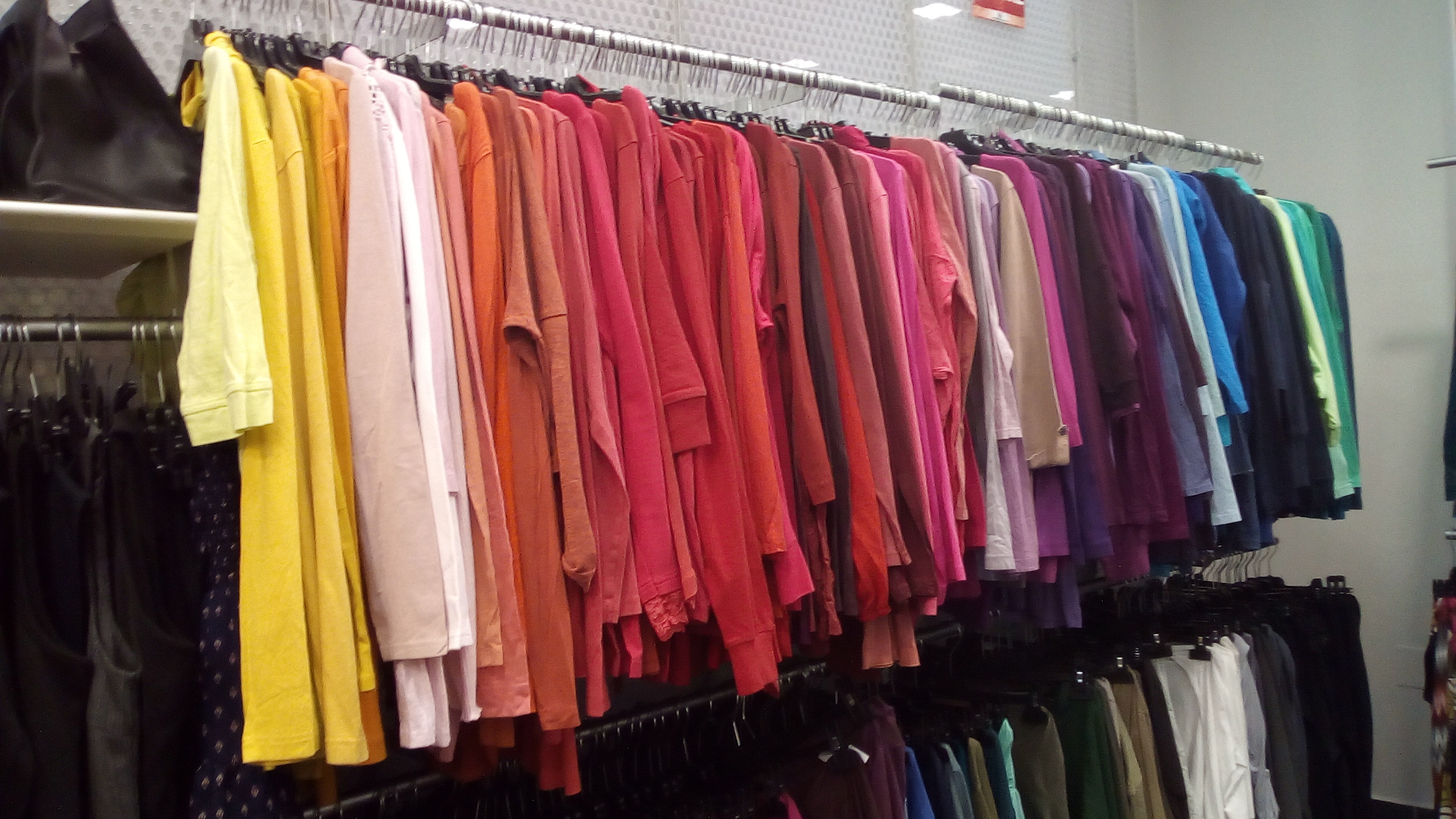
Second-hand clothing on display. Photo via Wikimedia Commons, CC BY-SA 4.0.
A six-point inspection
Fabric and content. Read the care label. Natural fibres such as cotton, wool, and linen often age better than low-grade synthetics. Stretch a small section gently to feel whether the weave has gone slack.
Seams and stitching. Turn the garment inside out. Look for loose threads, puckering, or seams that have started to separate. Reinforced seams at the shoulders and crotch are a good sign.
Zippers and fasteners. Run every zipper its full length, twice. Check that buttons are present and secure, and that snaps still hold. Replacing a broken separating zipper is rarely worth the cost on a cheap item.
Stains and discolouration. Examine collars, cuffs, and underarms under good light. Yellowing and set-in stains often will not wash out. Pilling on knitwear is sometimes removable; deep felting is not.
Odour. Smell the fabric, especially the underarms and any vintage pieces. Smoke and mildew odours are difficult to remove fully and may indicate storage damage.
Fit and alterations. Try items on where possible. Note that some chains have reduced or removed fitting rooms, so check measurements against a garment you already own.
Exchange, not return
Many second-hand retailers offer only limited exchanges rather than refunds, sometimes within a short window such as 14 days, and final-sale items cannot be returned. Inspect carefully before buying, because correcting a mistake later may not be possible. Confirm the current policy at the specific store.
Quick decision guide
Buy
Solid fabric, intact seams, working fasteners, no set-in odour.
Maybe
Minor pilling or a missing button you can easily replace yourself.
Skip
Broken zippers, set-in stains, persistent odour, or stretched-out knit.